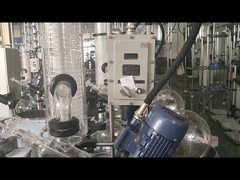
Glass Reactor For Lab Chemistry & Pharma

Other Videos
December 25, 2025
Category Connection: Lab Glass Reactor
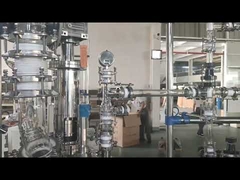
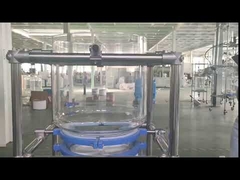
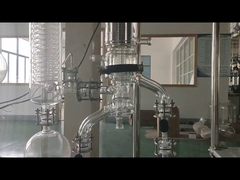
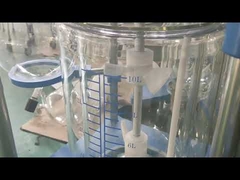
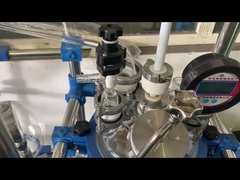
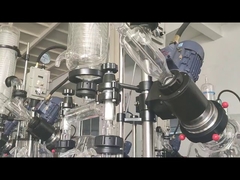
Brief: Observe the step-by-step operation and see practical examples of usage. This video provides a detailed walkthrough of the SUS 304 Double Jacketed Lab Glass Reactor, demonstrating its capabilities for heating, cooling, stirring, and mixing in modern chemistry, biochemical, and pharmaceutical applications. You'll see how the jacketed design and modular components work together for efficient reactions and easy cleaning.
Related Product Features:
  • Features a double-jacketed glass design with an interlayer for heating or cooling via external equipment.
  • Constructed from high borosilicate 3.3 glass, offering excellent resistance to heat, cold, and corrosion.
  • Equipped with solvent-resistant PTFE sealing components for enhanced durability and long-term operation.
  • Provides an adjustable stirring rate with great torque, suitable for a wide range of viscous materials.
  • Offers a wide operating temperature range from -60°C to 200°C for versatile reaction conditions.
  • Includes a large condenser cooling surface for exceptional condensation performance during processes.
  • Built with a heavy-duty stainless steel framework and lockable casters for mobility and stability.
  • Features a zero-dead-space bottom discharge valve for easy cleaning and material removal.
FAQs:
  • What is the purpose of the double-jacketed design in this glass reactor?
    The double-jacketed design features an interlayer between the inner and outer glass layers, allowing heating or cooling sources from external equipment to pass through. This enables precise temperature control for heating or cooling the materials or solvents inside the reaction vessel.
  • What applications is this glass reactor suitable for?
    This reactor is widely used for stirring, mixing, distillation, and extraction in modern chemistry, biochemical research, pharmaceutical development, and advanced synthetic processes due to its versatile design and temperature control capabilities.
  • How is the reactor constructed to ensure durability and chemical resistance?
    All glass components are hand-made from high borosilicate 3.3 glass, which is resistant to heat, cold, and corrosion. Additionally, all sealing parts use solvent-resistant PTFE to ensure long-term durability and reliable operation in various chemical environments.
  • What safety and operational features are included for user convenience?
    The reactor includes a heavy-duty stainless steel frame with lockable casters for stability and mobility, digital displays for speed and temperature monitoring, and a zero-dead-space bottom valve for easy cleaning and discharge, ensuring safe and efficient laboratory operations.